As prey animals, horses have evolved to be incredibly aware of their surroundings. Their survival has always depended on noticing subtle changes in their environment, body language, and the behaviour of those around them. While we can't know exactly what a horse is perceiving in any given moment, they are highly attentive to movement, posture, tension, and other non-verbal cues.
Unlike people, horses don't judge, criticize, or hold onto yesterday's conversation. They respond to what is happening in the present moment. This makes them powerful partners in therapy.
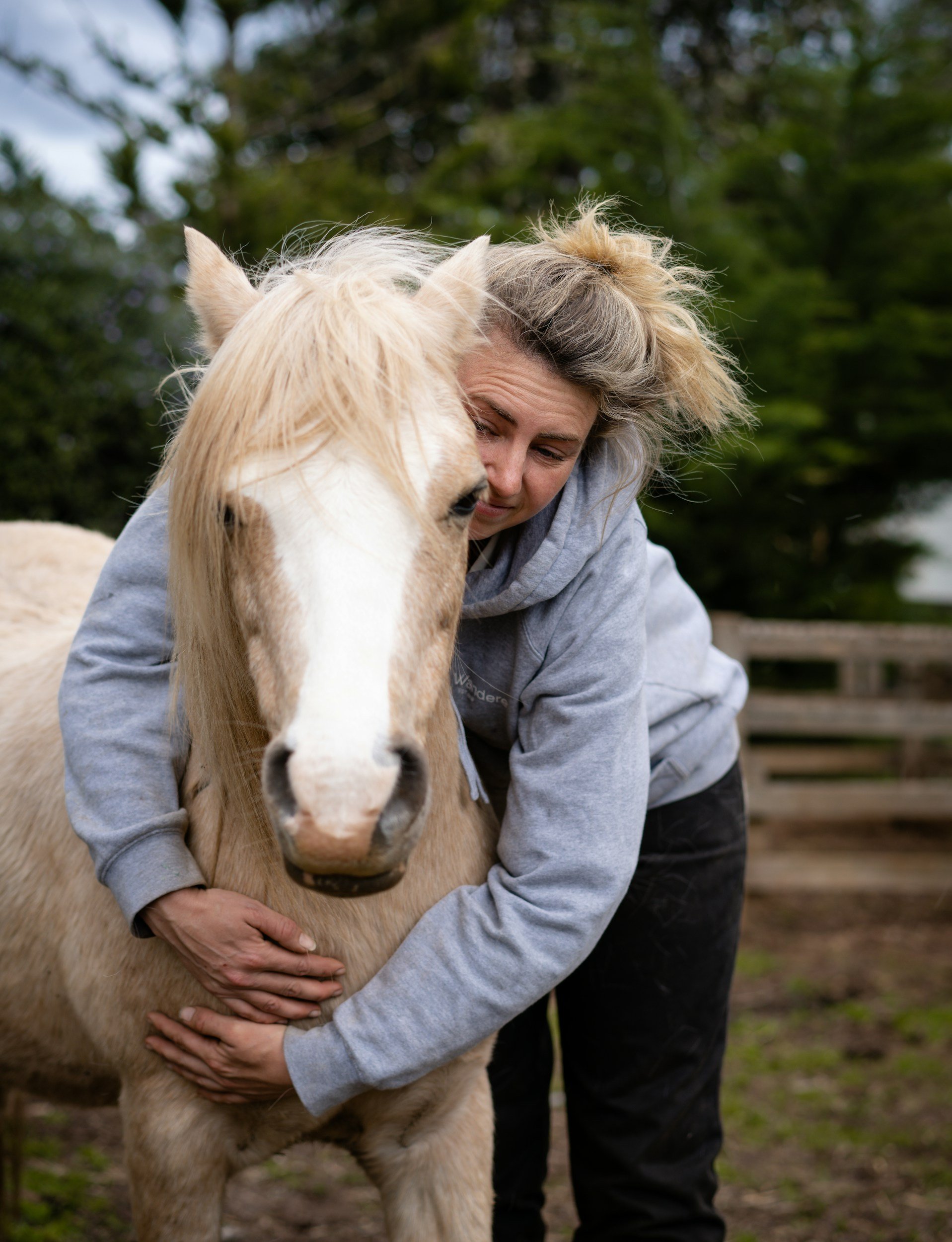
When we interact with a horse, we're invited to become more aware of ourselves: our breathing, body language, emotions, and patterns of communication. Horses offer immediate, honest feedback that can help us recognize when we're feeling tense, disconnected, or confident. These moments create opportunities to explore emotions, practice new coping strategies, and build self-awareness with the guidance of a trained therapist.
Why Horses?
What does the research say?
There has been numerous studies and research completed to show the effectiveness of equine assisted therapy. In this study, research demonstrated that interactions with the horses in equine assisted therapy involves trust, patience, and respect, and could help alleviate anxiety and improve control of emotions, with less tendencies to disruptive behaviour.
Moreover studies have shown that equine assisted therapy and being around horses can reduces anxiety and depression through physiological changes, such as reducing cortisol levels and lowering blood pressure. Being around horses forces us to be self-aware and mindful, and studies have shown that mindfulness may reduce symptoms of anxiety, depression and post-traumatic stress disorder (PTSD).